

Fix the old tilt door, or replace it?
This lake is full of tilt doors doing their sixth decade: one-piece panels on pivot arms, hung when the garage was built and never seriously questioned since. Toronto, Cardiff, Belmont's villa courts, the southern villages, they're everywhere, and they've mostly gone heavy. The question isn't whether the door owes you anything. It's whether the next spend belongs in this door or its successor.
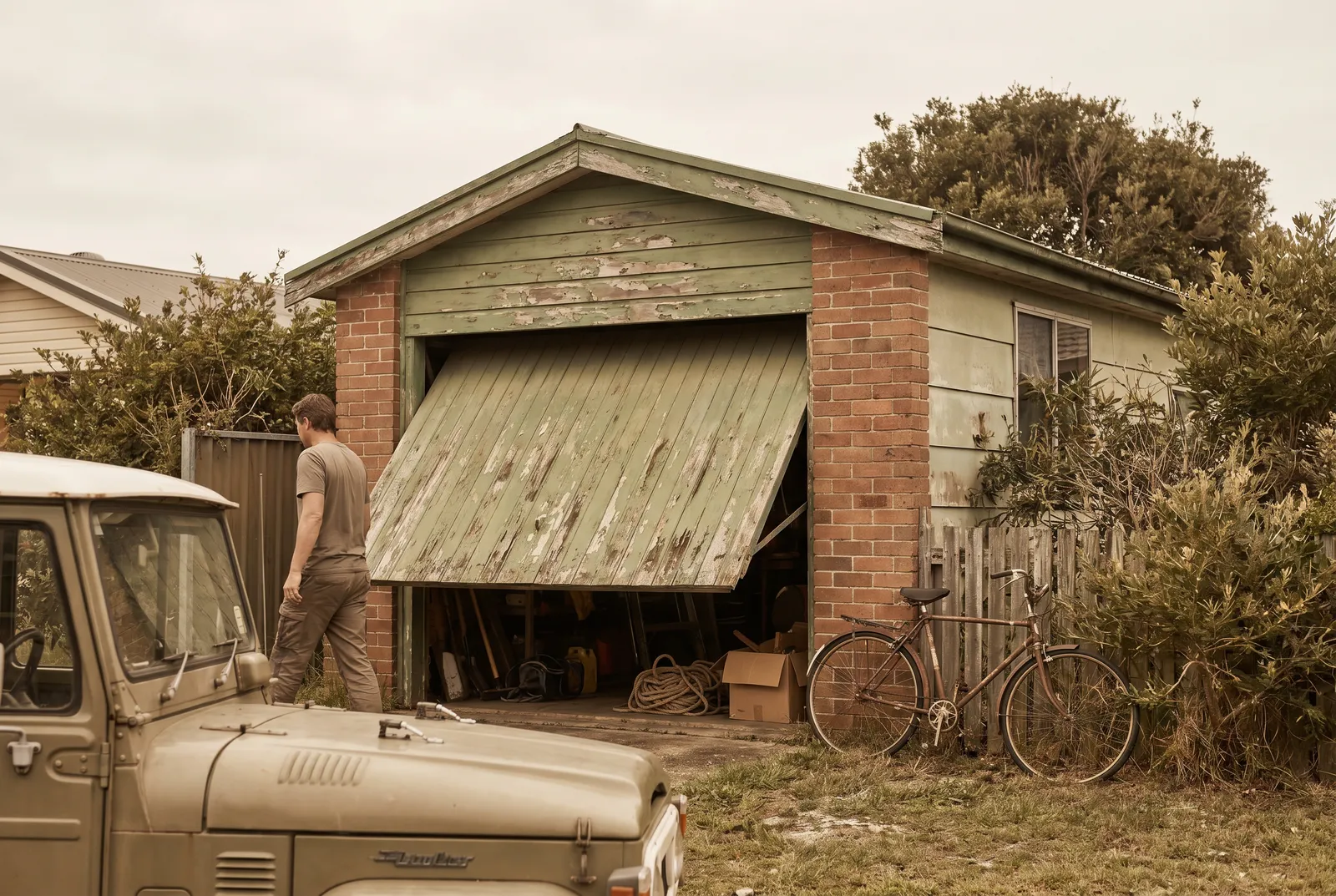
The case for fixing
- The mechanism is gloriously simple. A tilt door has the fewest moving parts of any door type: a panel, pivot arms, springs. When the panel itself is sound, timber not rotted, steel not rusted through, frame square, a rebalance and new springs genuinely resets the clock.
- "Gone heavy" is usually just springs. The door didn't gain weight; its counterbalance retired. That's a repair, and a satisfying one: the same door, one-hand light again.
- It fits the house. On an unrenovated mid-century place, the original door is part of the face. Plenty of owners rightly want it kept, and openers exist for tilt doors; Merlin and compatible units drive them fine, which is its own note.
The case for replacing
- The panel is the door. Rot in a timber panel or rust-through in a steel one can't be repaired economically; you'd be building a new door on old arms. That money buys most of an actual new door.
- The swing is a design cost you pay daily. A tilt door arcs outward as it opens, which is why short driveways and tilt doors argue. If you already park nose-to-door, a sectional or roller gives you back the metre the swing steals.
- Frames move, and tilt doors notice. A tilt panel needs a square opening more than any other type. Where the frame has shifted, common on the ridge, and not unknown anywhere the ground remembers mining, you can chase the catch-point forever or stop chasing it.
- Safety hardware has moved on. Modern doors and openers bring auto-reverse, better spring containment and quieter running. A repaired 1970 door is still a 1970 door, honest but analogue.
How we call it on site
The measure visit starts as an inspection, and the fork gets argued in the driveway: panel condition first, then frame squareness, then what the repair bill would total against what a replacement starts at, both in writing. Our rule is simple and we'll say it to your face: if the repair costs a meaningful fraction of the replacement and the panel's on borrowed time, we'll tell you to stop spending on it, and if the door's sound we'll happily take the smaller job. Either way the measure is free, and nothing gets ordered until you've sat with the quote.