

Garage door wear and tear or storm damage: what home insurance typically covers
Home building insurance typically covers a garage door damaged suddenly by an insured event such as a storm, impact or theft, but not the rust, weathering and worn springs that come with age and use.
Most home building policies do cover a garage door. What they pay for is the moment it breaks, not the years it spends wearing out.
Put two big insurers' wording side by side and both draw the line in the same place. AAMI says sudden damage from insured events, including weather events and impact, is not considered wear, tear and deterioration. Suncorp excludes wear from "the ordinary effects of natural forces such as weather". So weather sits on both sides of the line. The storm that buckles a panel overnight is an insured event. The years of sun and salt air that fade and rust that same panel are not.
If you've heard that garage doors aren't covered at all, AAMI says most policies do cover repairs to garage doors, and what decides it is the policy type and the cause of the damage.
This guide from Garage Doors Lake Macquarie works through which side of that line your door's problem usually falls on, and what to check before you ring your insurer. If your door was hit by hail, our hail damage guide covers dents and repair-or-replace in detail.
Does home insurance cover garage door damage?
| Sudden, insured events (AAMI's list) | Wear, tear and deterioration (AAMI's door examples) |
|---|---|
| Storms (including hail) | Scratches from daily use |
| Fire | Weathering from the elements |
| Flood | Rust from moisture |
| Theft | Wear on springs from constant use |
| Impact | |
| Vandalism | |
| Policies typically exclude loss "caused by, arising from or connected with wear, tear and deterioration". Check your PDS. | |
Typically yes, under building cover. AAMI defines fixtures as items permanently attached to the property, which building insurance covers, and a garage door is bolted to the house. The same page says the Product Disclosure Statement lists exactly what is included.
AAMI says garage doors are generally covered under building insurance for loss or damage from insured events, with limits and exclusions. Its listed events include storms (including hail), fire, flood, theft, impact and vandalism, among others.
Contents insurance on its own won't pay for the door: Suncorp says contents cover doesn't cover the garage building itself, and you need home (building) insurance for that.
When a claim is accepted, Suncorp says you're entitled to a repair, replacement or cash settlement.
Live in a townhouse or unit? The door may not be yours to insure. The NSW Government lists garage repairs among the repairs the owners corporation is usually responsible for, and where it's unclear, the strata plan and by-laws decide.
Where does storm damage end and wear and tear begin?
Sudden event, typically covered
- Dented upper panel (storm, including hail)
- Pushed-in bottom panel and bent track (impact, including your own car, Suncorp)
- Forced lock area (theft or vandalism)
Gradual wear, typically excluded
- Scratches beside the handle (daily use)
- Faded finish across the panels (weathering)
- Rust along the bottom rail (moisture)
- Spring coil (wear from constant use)
Depends on the policy
- Opener motor (lightning and power surges covered by NRMA; motor burnout an optional extra at NRMA)
The test is speed. Did something happen to the door, or did the door slowly decline?
AAMI's examples of wear, tear and deterioration on a garage door are scratches from daily use, weathering from the elements, rust from moisture, and wear on springs from constant use. Its policies exclude any loss "caused by, arising from or connected with wear, tear and deterioration".
Suncorp's wear examples are weathering of roof tiles, bricks, mortar and concrete. It doesn't name garage doors, but the principle reads the same: ordinary use and ordinary weather are your maintenance bill, not a claim.
That matters around the lake. A door near the channel or the beach meets salt air every day, and the rust that follows counts as gradual. Our guide to salt, humidity and door lifespan explains how to slow it.
Which garage door problems fall in the grey areas?
| What happened | Usually falls on | What decides it | Source |
|---|---|---|---|
| Reversed into the door | Sudden impact | Suncorp covers the door under Home Insurance; the car needs a separate comprehensive car claim | Suncorp |
| Spring snapped | Usually wear | AAMI lists wear on springs from constant use as wear and tear | AAMI |
| Opener dead after a storm | Depends | Lightning, including power surges caused by lightning, is covered by NRMA. Motor burnout is optional on Building Standard and included in Building Plus, for electric motors in fixtures and permanently fixed appliances up to 15 years after manufacture, not under warranty and not used for business. Whether an opener counts is for the insurer. | NRMA |
| Door jams after a storm | Depends on the cause | Storm-bent track versus worn parts; the insurer decides | |
| Old rust found after a storm | The rust is wear | The insurer looks at what the storm did |
Most real cases are messier than "storm" or "rust". Here is how the common ones tend to sort, using one insurer's wording each. Your PDS has the final say, and so does your insurer.
You reversed into the door. That's sudden impact. Suncorp says damage to the door from your own car is covered under its Home Insurance, and the car needs a separate comprehensive car claim.
A spring snapped. Usually wear. AAMI lists wear on springs from constant use as wear and tear. Don't try to fix a broken spring yourself: our DIY safety guide explains why.
The opener died after a storm. This one depends on the policy. NRMA covers lightning damage, including power surges caused by lightning. It also offers motor burnout cover as an optional extra on Building Standard, included in Building Plus, for electric motors in fixtures and permanently fixed appliances, up to 15 years after manufacture, if they aren't under warranty or used for business. NRMA's page names air conditioners and dishwashers, not garage door openers, so ask your insurer whether an opener counts. That's one insurer, so check your own PDS. Our guide to openers in power outages covers getting the door open in the meantime.
The door jams after a storm. Look for the cause. A track bent by a falling branch is a sudden event. A roller that was already worn and finally seized is wear that happened to show up on a stormy day.
The storm uncovered old damage. Rust behind a panel the wind pushed in is still rust. Photos of what the storm did, plus a written note from your tradesperson on the door's age and condition, help the insurer see the difference. The insurer, not the tradesperson, decides what's covered.
Can you claim a garage door on insurance? Five checks first
Your PDS lists exactly what's included. (AAMI)
Before you lodge, spend ten minutes with your policy.
- Building cover, not just contents. Contents alone doesn't cover the garage building itself.
- The 72-hour wait. For the first 72 hours of a new policy, AAMI does not insure for bushfire, storm, storm surge, flood or tsunami, with very limited exceptions. Suncorp states the same 72-hour rule. Buying cover as a storm rolls in won't help with that storm.
- Accidental damage. AAMI's optional Accidental Damage at Home cover, for an extra premium, can help with hard knocks and spills.
- The opener motor. Motor burnout is an optional extra at NRMA, so don't assume it's in yours.
- Your excess. Put the repair quote next to it. If the quote is lower, a claim gains you nothing.
One more detail: the insurer pages quoted here describe current policies. AAMI's page applies to policies starting or renewing on or after 24 Jan 2025, and an older policy may be worded differently.
Garage door repair insurance claim: what to do first
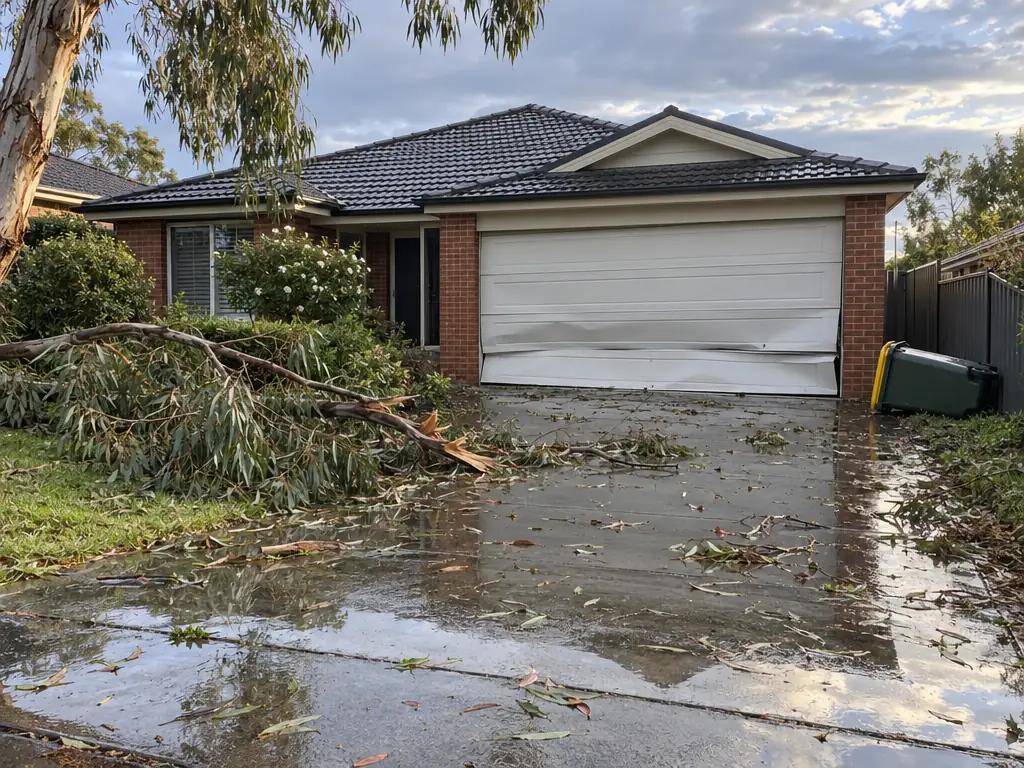
- Make everyone safe (Suncorp)
- Call your insurer and check your policy before cleaning up (Legal Aid NSW)
- Photos or video, before and after any clean-up (Suncorp, Legal Aid NSW)
- Tell the insurer if you need temporary emergency repairs (Suncorp)
- Use a licensed tradesperson: work above the NSW value threshold needs a licence, no emergency exemption (NSW Government)
- Deposit capped at 10% where a written contract is required (NSW Government)
NSW storm season falls between September and April, so this is the stretch of the year when these steps get used.
Make it safe. Suncorp's first step is to make everyone safe. A door hanging off its track is heavy. Keep the car and the kids clear.
Call before you clean. NSW Legal Aid says to call your insurer, check your policy, and talk to the insurer before cleaning up.
Photograph everything. Suncorp says to take photos or videos of the damage to upload with the claim. Legal Aid adds: take photos before and after cleaning up. Get wide shots of the whole door and close-ups of each dent, bend and break.
Tell the insurer about emergency repairs. If the door won't close and the house is open, Suncorp says to tell the insurer if you need temporary emergency repairs.
Ask for the cause in writing. Whoever inspects the door can describe what broke, how, and the door's general condition. That record helps the insurer assess it.
Use a licensed tradesperson. Under the NSW Home Building Act, residential building work above a set value needs a licence (and specialist work such as electrical needs one whatever its value), and there are no licensing exemptions for emergency work. Where a written contract is required, a deposit is capped at 10% of the contract price. The NSW Government says consumers are vulnerable after disasters and should be wary of unlicensed tradespeople.
After a larger disaster, NSW SES says to contact Service NSW on 13 77 88 for recovery assistance.
What if the insurer says no?
You can push back. NSW Legal Aid says that if you disagree with a decision you can ask for an internal review, then complain to AFCA (1800 931 678).
Go back with what you have: the photos, the tradesperson's written description, and the clause the insurer relied on. Ask them to point to it in your PDS.
Does regular servicing help with a claim?
Servicing won't decide a claim. The insurer does that. What it does is catch the wear AAMI lists before that wear becomes your bill.
AAMI says garage doors should ideally be serviced every one to two years, with moving parts lubricated every 3 to 6 months and the tracks cleaned monthly. Its red flags are loud squeaking, jolty movement, jamming, and a door that closes fast but opens slowly.
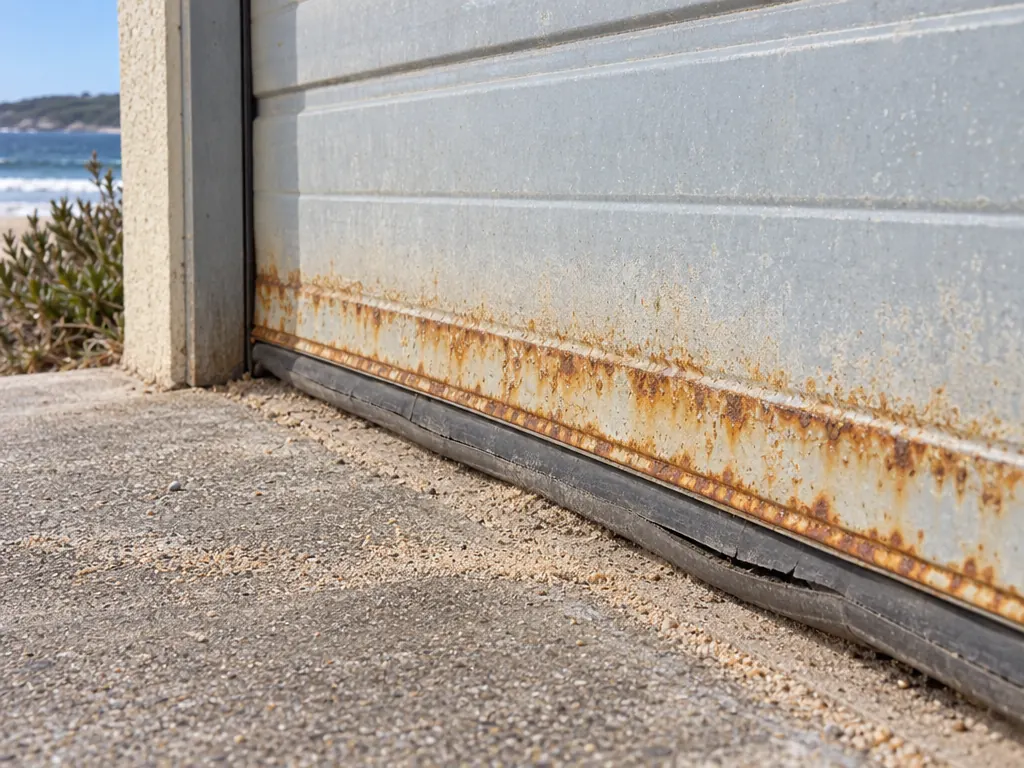
There's a warranty angle too. AAMI notes that some manufacturers require periodic maintenance to keep a warranty valid, so follow the manufacturer's requirements. Our service and tune-up page explains what a service involves, and the storm season checks guide covers what to look at before the next front comes through.
The numbers worth keeping
- 72 hours: no storm or flood cover at the start of a new policy (AAMI, Suncorp)
- Licence threshold: residential building work above the NSW value limit needs a licence, no emergency exemption (NSW Government)
- 10%: deposit cap where a written contract is required (NSW Government)
- 15 years: NRMA can cover electric motors in fixtures and permanently fixed appliances up to 15 years after manufacture, if not under warranty or used for business (NRMA)
- Every one to two years: service; 3 to 6 months: lubricate; monthly: clean tracks (AAMI)
- 1800 931 678: AFCA, after an internal review (Legal Aid NSW)
- 13 77 88: Service NSW, for recovery assistance after a disaster (NSW SES)
Seven figures carry most of this guide: the 72-hour new-policy wait, the licence value threshold, the 10% deposit cap, NRMA's 15-year motor burnout limit, the service intervals, AFCA's number and Service NSW's. Each is linked where it appears above.
Not sure which side of the line your door is on?
Start with the door itself. If a storm, a branch or a car has damaged it, photograph it, make it safe and call your insurer before anything is cleaned up. If it has been squeaking, jolting or jamming for months, it's more likely a maintenance job than a claim, and the sooner it's looked at, the less the wear spreads.
Either way, you can ask Garage Doors Lake Macquarie to look at it by sending the details through our enquiry page. Your insurer makes the coverage call. Knowing exactly what's wrong with the door is the step that comes before it.
Sources
- https://www.aami.com.au/aami-informed/in-the-home/garage-door-wear-and-tear
- https://www.aami.com.au/aami-informed/in-the-home/whats-the-difference-between-fixtures-and-fittings
- https://www.suncorp.com.au/learn-about/maintaining-a-home/are-garages-covered-by-home-insurance.html
- https://www.suncorp.com.au/home-contents-explained/events/wear-tear-and-gradual-deterioration.html
- https://www.nrma.com.au/home-insurance/buildings-insurance
- https://www.legalaid.nsw.gov.au/ways-to-get-help/publications-and-resources/what-to-do-after-a-disaster-your-insurance-questions-answered
- https://www.nsw.gov.au/housing-and-construction/building-or-renovating-a-home/during-building-process/emergency-repairs
- https://www.nsw.gov.au/housing-and-construction/strata/living/repairs-and-maintenance
- https://www.ses.nsw.gov.au/during-emergency/during-storm
- https://www.ses.nsw.gov.au/recovery
Pictures in this guide are illustrations, not photos of our jobs.