

Garage door weather seals: the cheapest fix on the whole door
The bottom seal is the hardest-working rubber in the house. It gets crushed a few times a day, cooked in summer, soaked all winter, and around this lake it does all that in air that ranges from channel-side salt to ridge-top dry. When it gives up, the garage tells you: water lines after rain, leaves in the corners, drafts you can feel at ankle height.
Reading your seal in two minutes
- The daylight test. Close the door, kill the lights, look along the bottom edge from inside. Daylight anywhere means water gets in there too; wind-driven storm rain doesn't need much of a gap.
- The touch test. Healthy seal rubber flexes and springs back. A seal at the end of its life feels stiff, cracked or chalky, and stays creased where the door last crushed it.
- The floor's testimony. A tide-mark of silt inside the door line after heavy rain is the seal's resignation letter, already handed in.
What wears seals faster on this lake
Position, mostly. Channel-side and lakeside doors take more UV plus salt-humid air, and their seals stiffen years earlier than the same rubber up the hill; it's a standing item on our channel-side condition notes. On the Warners Bay flat the seal is doing genuine flood-edge duty and is worth treating as consumable rather than furniture. And anywhere the driveway slopes toward the door, the seal is fighting gravity's water as well as the sky's, which no seal wins forever; sometimes the honest fix there is a threshold seal on the slab, not just rubber on the door.
The kinds, briefly
Bottom seals come as simple blade rubber, U-profile rubber in an aluminium carrier, and heavier multi-fin profiles for rough slabs. Around jambs and headers, brush seals close the side gaps and do double duty against leaves and vermin. Purpose-made retrofit systems, Cleverseal is the name owners ask about most, package these into kits for common doors, and they're good gear; we mention the name because you'll meet it researching, not because anyone pays us to. What matters more than the brand is matching the profile to your slab: a beautifully made seal in the wrong profile still waves water through.
DIY or call-out?
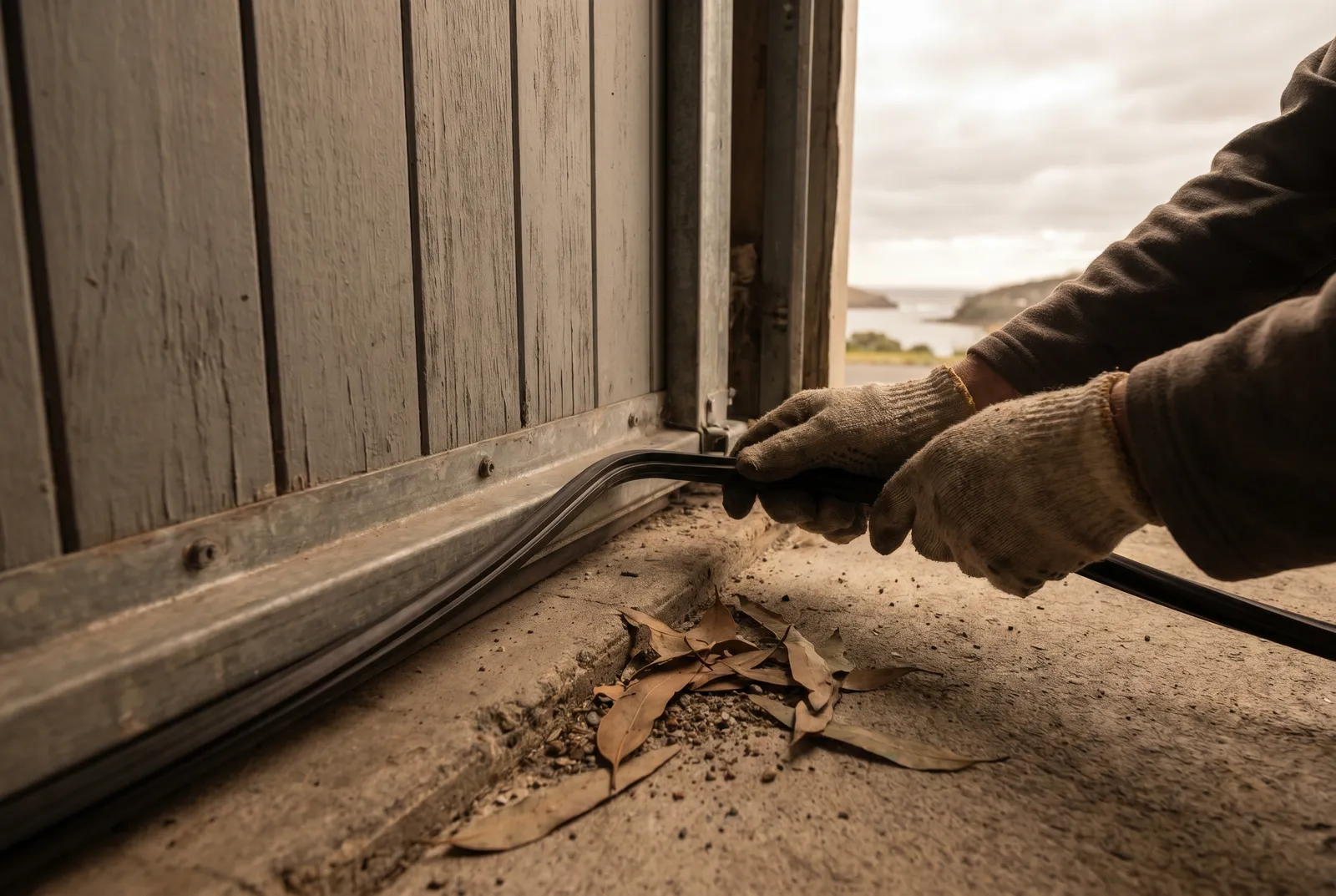
Replacing a simple bottom blade on a roller door you can lift safely is honest DIY for a handy owner, and we'd rather you did it than lived with a dead seal. Carrier-type seals on sectionals, threshold seals, and anything requiring the door held mid-travel are call-out territory, mostly because the failure mode of improvising there is the door itself. It's a standard line item on any service visit, checked every time whether you asked or not.